
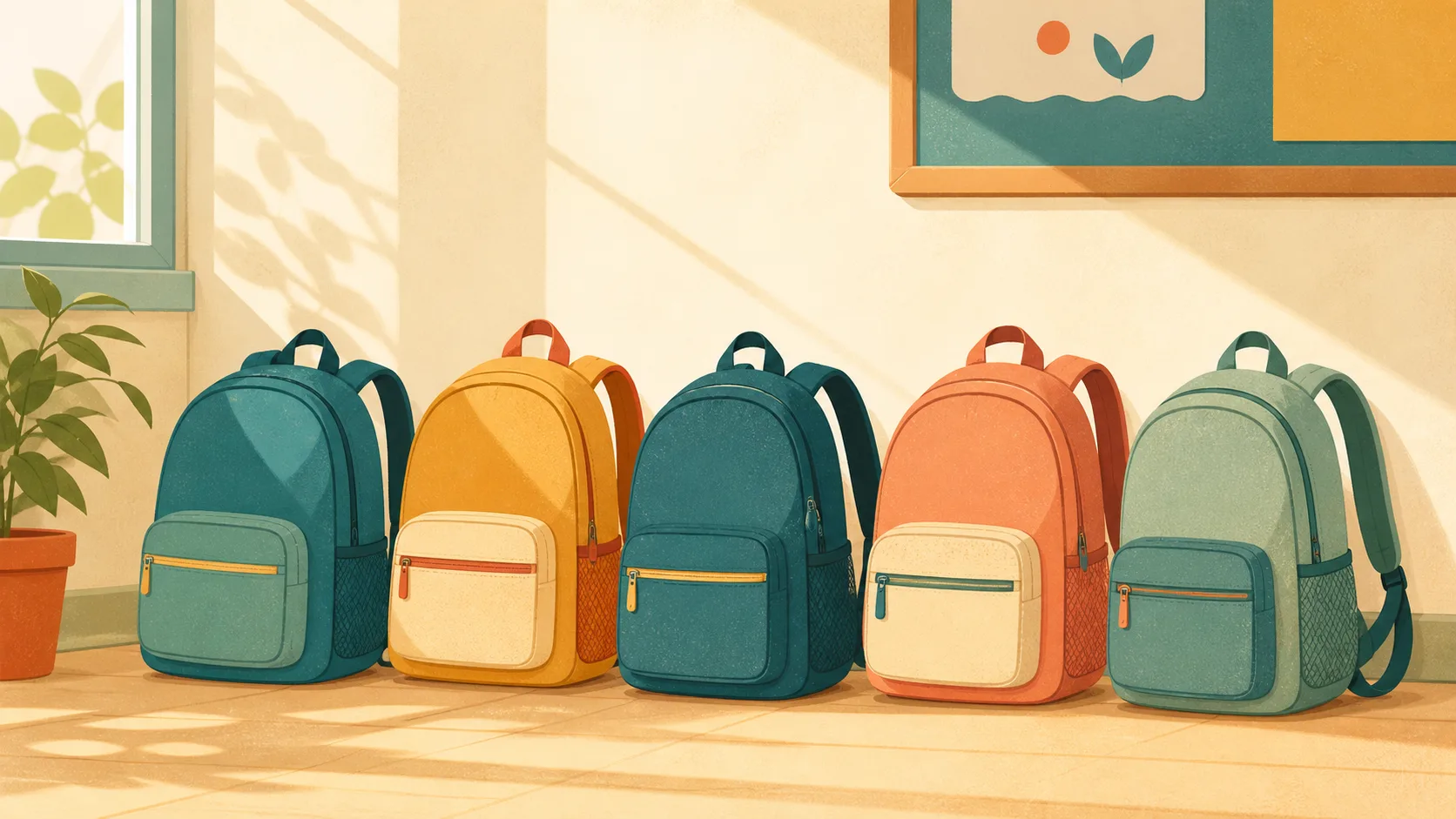
Mochilas escolares para la vuelta al cole en EE.UU. 2026
Por qué importa elegir bien la mochila escolar
La mochila es la compañera diaria del estudiante durante unos 180 días lectivos al año, el número habitual de días de clase que exigen la mayoría de los estados. Una mochila mal elegida puede provocar dolor de espalda crónico, mala postura y lesiones de hombro que se acumulan a lo largo del curso.
La vuelta al cole suele coincidir con el Labor Day —el festivo federal del primer lunes de septiembre según 5 U.S.C. § 6103—, aunque muchos distritos, sobre todo del sur, empiezan a finales de julio o en agosto. Consulta el calendario escolar de tu estado para planificar la compra en el momento adecuado.
Divulgación: esta guía contiene enlaces de afiliado. Como afiliados, ganamos una comisión cuando compras a través de nuestros enlaces, sin coste adicional para ti. Esto no influye en nuestras recomendaciones, basadas en la investigación del producto y el criterio editorial. Todas las relaciones de afiliación se divulgan conforme a las directrices de la FTC.
Elegir la mochila según el grado
La mochila adecuada depende mucho del grado del estudiante y de cuánto tenga que cargar:
Pre-K y kindergarten (3-6 años): pequeña, 10-15 litros máximo. Debe ser tan ligera que el niño la maneje solo. Busca diseños sencillos de dos compartimentos, tirantes anchos acolchados y cremalleras resistentes. A esta edad la mochila lleva material de manualidades y la lonchera, no libros.
Elementary school (grados 1-5, 6-11 años): una mochila de 15-20 litros va bien. La mejora clave frente a preescolar es el panel trasero acolchado y los tirantes acolchados y ajustables, que permiten un buen encaje según crece el niño. Una correa de pecho ayuda a repartir el peso. Las mochilas ergonómicas con soporte lumbar ayudan especialmente en los grados 3-5, cuando ya se cargan libros más pesados.
Middle school (grados 6-8, 11-14 años): la capacidad sube a 20-28 litros. Muchos alumnos llevan Chromebook o tableta, así que el compartimento acolchado para tecnología es cada vez más estándar. Los bolsillos de organización y el gancho para llaves ayudan a manejar horarios y materiales más complejos.
High school (grados 9-12, 14-18 años): una mochila de 25-35 litros con compartimento acolchado para portátil (13-15") es lo habitual. Aquí la estética importa más: muchos prefieren diseños minimalistas y de aspecto adulto. La construcción reforzada y unas buenas cremalleras son críticas para el uso diario intenso.
Ergonomía y límites de peso
La American Academy of Pediatrics y la American Occupational Therapy Association recomiendan que el estudiante no cargue más del 10-15 % de su peso corporal en la mochila. Para un estudiante de 45 kg, eso es un máximo de 4,5-6,8 kg con la mochila llena.
El reparto del peso importa tanto como el peso total. Coloca lo más pesado (libros, portátil) pegado a la espalda, en el compartimento principal. Lo ligero, en los bolsillos delanteros o laterales. Hay que usar siempre los dos tirantes: llevar la mochila de un solo hombro carga la columna de forma asimétrica.
Si el alumno carga habitualmente más del límite recomendado, las mochilas con ruedas son una buena alternativa, siempre que el edificio sea accesible (con ascensor o rampas). Algunas escuelas tienen taquillas que reducen lo que hay que cargar.
Materiales, durabilidad y presupuesto
La mayoría de mochilas de calidad usan poliéster de alto denier (resistente al agua y ligero) o nailon (más resistente, algo más pesado). Los tejidos ripstop aguantan mejor los desgarros. Para climas lluviosos (noroeste del Pacífico, sureste), busca tratamiento DWR (repelente al agua) o funda de lluvia.
Una mochila de calidad debería durar de 3 a 5 años de uso diario intenso. Varias marcas (Jansport, Eastpak) ofrecen garantía de por vida. Gastar algo más en una marca fiable suele salir más barato, a lo largo de los años, que reponer una mochila barata cada curso.
Aprovecha los tax-free weekends de tu estado: pueden ahorrar un 8-10 % en las compras que aplican. Algunos estados extienden la exención a mochilas por debajo de cierto umbral de precio (normalmente entre 50 y 100 dólares por artículo).
Preguntas frecuentes sobre mochilas escolares para la vuelta al cole 2026
¿Cuándo empieza la vuelta al cole en EE.UU. en 2026?
La vuelta al cole en EE.UU. varía según el estado y el distrito. La mayoría de las escuelas públicas del sur empiezan a finales de julio o principios de agosto; las del noreste suelen empezar después del Labor Day (primer lunes de septiembre, festivo federal según 5 U.S.C. § 6103). Consulta el calendario escolar de EE.UU. 2026 para ver las fechas por estado.
¿Cuánto debe pesar una mochila escolar?
Las guías de pediatría y de fisioterapia recomiendan que la mochila cargada no supere el 10-15 % del peso corporal del niño. Para un niño de 27 kg, eso significa no más de 2,7-4 kg con la mochila llena. La American Occupational Therapy Association (AOTA) y la American Academy of Pediatrics respaldan esta recomendación.
¿Cuál es la mejor mochila para elementary school (primaria)?
Para primaria (grados K-5, de 5 a 11 años), busca una mochila con tirantes acolchados y ajustables, panel trasero acolchado, correa de pecho para repartir el peso y una capacidad de 15-20 litros. El peso en vacío debería ser menor de medio kilo. Evita las mochilas con estructura metálica rígida para los más pequeños.
¿Existen fines de semana sin impuestos para la vuelta al cole en EE.UU.?
Sí. Varios estados ofrecen tax-free weekends anuales sobre material escolar durante la vuelta al cole (normalmente a finales de julio o principios de agosto). Suelen ofrecerlos Florida, Texas, Ohio, Virginia, Maryland y otros. Consulta el departamento de impuestos de tu estado para las fechas del año y los artículos que aplican. Suelen cubrir ropa, calzado y material escolar por debajo de ciertos umbrales de precio.
¿Obliga la FLSA a las empresas a dar tiempo libre por la vuelta al cole?
La Fair Labor Standards Act (FLSA) no obliga a las empresas del sector privado a dar festivos ni tiempo libre por actividades de vuelta al cole. Los festivos federales (5 U.S.C. § 6103) aplican solo a los empleados federales. Aun así, muchas empresas ofrecen políticas de permisos flexibles o PTO que el trabajador puede usar para asuntos escolares.
¿Cómo elijo mochila para high school (secundaria alta)?
Para high school (grados 9-12, de 14 a 18 años), prioriza un compartimento acolchado para portátil (de 13 a 15"), una capacidad de 25-35 litros, cremalleras reforzadas y bolsillos de organización. Muchos estudiantes prefieren un diseño minimalista a esta edad. Busca tirantes ergonómicos igualmente: la carga de libros sigue siendo un problema.
¿Es seguro comprar mochilas escolares por internet en EE.UU.?
Sí, comprando en tiendas de confianza. Busca sitios con conexión segura HTTPS, políticas de devolución claras y reseñas verificadas. Las grandes plataformas (Amazon, Target.com, Walmart.com) ofrecen protección al comprador. Según la guía de compras online de la FTC, revisa siempre la política de privacidad y las condiciones de devolución antes de completar la compra.
¿Qué garantía suelen tener las mochilas escolares en EE.UU.?
La cobertura varía mucho según la marca. Jansport y Eastpak ofrecen garantía de por vida en sus líneas de mochila escolar. La mayoría de fabricantes ofrecen 1 año de garantía limitada contra defectos de fabricación. Tiendas como Amazon y Target suelen tener sus propios plazos de devolución (30-90 días) para productos defectuosos, aparte de la garantía del fabricante.
Artículos relacionados
 Vuelta al cole Comprar o rentar libros de texto Cuándo conviene comprar, rentar o usar digital para ahorrar.
  Vuelta al cole Lista de útiles para el regreso a clases Checklist completo de útiles por grado para empezar el año.
  Vuelta al cole Mejores calculadoras científicas Qué modelo pide la escuela y cuáles se admiten en exámenes.